





I see all Pajeet names given as Inventors. All probably lied about their educational and research backgrounds. They sold this bullshit to Wells Fargo and probably had an accomplice at that institution.
It could be Israel making a payoff to these jeets for stealing American research. Money gets funneled through a hoax patent assignment.
The Smart Dust project was funded by DARPA for "military" applications
Duration: 4:47 Views: 6.0K Submitted: 5 months ago Submitted by:
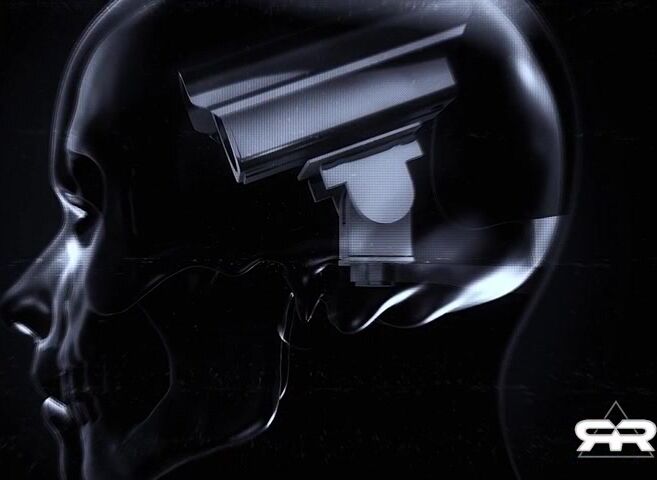
The Smart Dust project was funded by DARPA for military applications — specifically for rapid deployment of defense sensor networks onto the battlefield. Battlefield sensing is inherently about detecting people who don’t know they’re being detected. The invisibility and undetectability are deliberate design priorities.
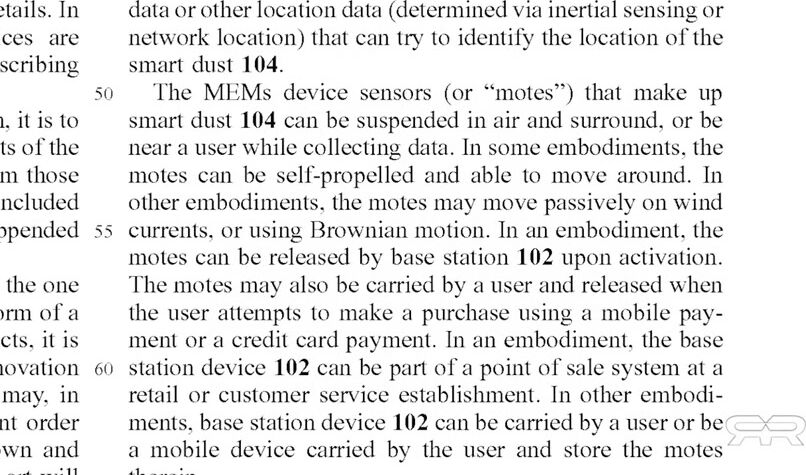
This technology appeared in the public with US Patent 11,354,666 B1, “Smart Dust Usage”, which was filed on May 26, 2016, and granted on June 7, 2022. It is assigned to Wells Fargo Bank and describes a system for authenticating a user making a payment using “smart dust.” Smart Dust is technically known as MEMS, microelectromechanical systems, and is comprised of what are called motes.
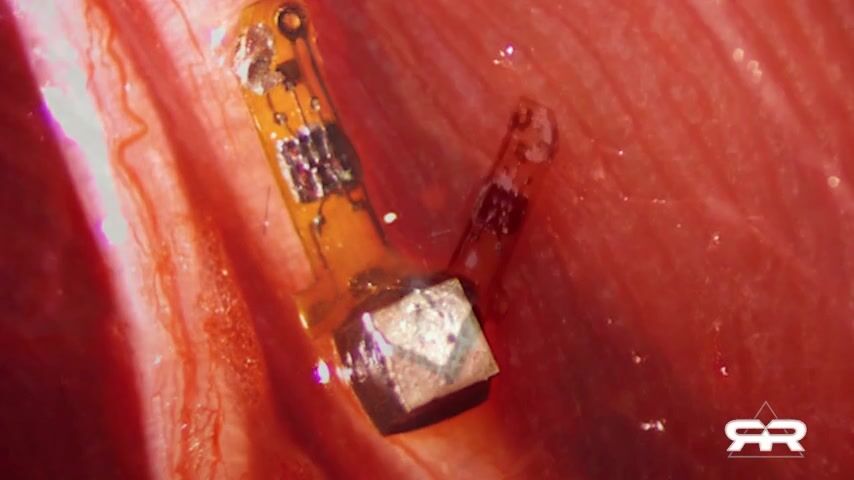
A mote is a single, self-contained micro-sensor node. Each mote measures one cubic millimeter or less, and is roughly the size of a grain of sand. These ‘motes’ are released as clouds, with thousands of sensor nodes simultaneously sampling the target from multiple angles and positions. The Biometric data being collected includes: location, facial and body recognition, heart rate, blood pressure, body temperature, breath rate, voice recognition, and fingerprint scanning. T
he system is designed to create a unique cryptographic signature for every individual based on biological and behavioral data, and is designed to operate without being noticed. The patent describes the motes as a “cloud” around the user, but UC Berkeley researchers have successfully implanted smart dust sensors into rats in order to monitor and control nerve and muscle activity. This technology requires no batteries and relies on ultrasound to draw power.
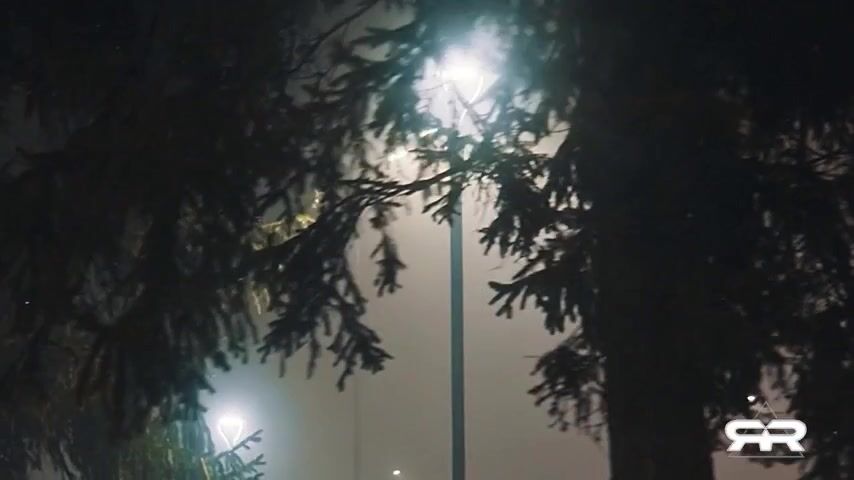
Scientists claim that for humans, internal smart dust devices could monitor vital signs, and could enable control over prosthetics and robotic limbs. In March 2022, the University of Washington’s “Dandelion” breakthrough, partially funded by the U.S. Air Force, deployed tiny battery-free wireless sensors by wind, inspired by dandelion seeds. The senior author stated that: “Our prototype suggests that you could use a drone to release thousands of these devices in a single drop.” In 2024, a large blanket of fog affected the United Kingdom, the USA and Canada.
Over 20,000 travelers in the UK and 3.8 million drivers in the USA were impacted. People described it as “a thick blanket of fog” with a “particle-like” appearance, which had an odd “chemical, electrical, or burning” smell to it. And many people claimed to experience fever, coughing, sore throat, headache, and fatigue after exposure. The fog hit during the Christmas and New Year travel period, when millions were moving around for the holidays.
A second patent, US 11,748,578 B1 “Predictive Text System”, was filed in November 2021, and granted on September 2023, to Wells Fargo Bank. This patent describes a system that uses neural networks and machine learning to analyze and predict your financial thoughts and intentions in real-time as you type. Combined with the biometric data from smart dust, this creates a system that can monitor both what you’re physically doing and what you’re thinking about financially. A predictive behavioral surveillance system designed to be always-on and continuously learning. This is the exact infrastructure needed for implementing a social credit system.
The smart dust market was valued at 153.9 million dollars in 2024 and is estimated to grow at a compound annual growth rate of over 14.3% from 2025 to 2034. Industrial use has increased significantly in 2023 and 2024, with integration of artificial intelligence and machine learning algorithms now allowing smart dust devices to analyze data locally and make autonomous decisions. This technology is currently moving from laboratories to public deployment — which has naturally caused concern. In the 1950s and 60s, the U.S. Army conducted open-air biological and chemical tests over American cities without public knowledge or consent.
This technology appeared in the public with US Patent 11,354,666 B1, “Smart Dust Usage”, which was filed on May 26, 2016, and granted on June 7, 2022. It is assigned to Wells Fargo Bank and describes a system for authenticating a user making a payment using “smart dust.” Smart Dust is technically known as MEMS, microelectromechanical systems, and is comprised of what are called motes.
A mote is a single, self-contained micro-sensor node. Each mote measures one cubic millimeter or less, and is roughly the size of a grain of sand. These ‘motes’ are released as clouds, with thousands of sensor nodes simultaneously sampling the target from multiple angles and positions. The Biometric data being collected includes: location, facial and body recognition, heart rate, blood pressure, body temperature, breath rate, voice recognition, and fingerprint scanning. T
he system is designed to create a unique cryptographic signature for every individual based on biological and behavioral data, and is designed to operate without being noticed. The patent describes the motes as a “cloud” around the user, but UC Berkeley researchers have successfully implanted smart dust sensors into rats in order to monitor and control nerve and muscle activity. This technology requires no batteries and relies on ultrasound to draw power.
Scientists claim that for humans, internal smart dust devices could monitor vital signs, and could enable control over prosthetics and robotic limbs. In March 2022, the University of Washington’s “Dandelion” breakthrough, partially funded by the U.S. Air Force, deployed tiny battery-free wireless sensors by wind, inspired by dandelion seeds. The senior author stated that: “Our prototype suggests that you could use a drone to release thousands of these devices in a single drop.” In 2024, a large blanket of fog affected the United Kingdom, the USA and Canada.
Over 20,000 travelers in the UK and 3.8 million drivers in the USA were impacted. People described it as “a thick blanket of fog” with a “particle-like” appearance, which had an odd “chemical, electrical, or burning” smell to it. And many people claimed to experience fever, coughing, sore throat, headache, and fatigue after exposure. The fog hit during the Christmas and New Year travel period, when millions were moving around for the holidays.
A second patent, US 11,748,578 B1 “Predictive Text System”, was filed in November 2021, and granted on September 2023, to Wells Fargo Bank. This patent describes a system that uses neural networks and machine learning to analyze and predict your financial thoughts and intentions in real-time as you type. Combined with the biometric data from smart dust, this creates a system that can monitor both what you’re physically doing and what you’re thinking about financially. A predictive behavioral surveillance system designed to be always-on and continuously learning. This is the exact infrastructure needed for implementing a social credit system.
The smart dust market was valued at 153.9 million dollars in 2024 and is estimated to grow at a compound annual growth rate of over 14.3% from 2025 to 2034. Industrial use has increased significantly in 2023 and 2024, with integration of artificial intelligence and machine learning algorithms now allowing smart dust devices to analyze data locally and make autonomous decisions. This technology is currently moving from laboratories to public deployment — which has naturally caused concern. In the 1950s and 60s, the U.S. Army conducted open-air biological and chemical tests over American cities without public knowledge or consent.

WhiteAngloZaxxonPro 5 months ago

tommix1 5 months ago
Facial recognition without a camera?? This dust is just likely smoke blown up the asses of the believers. At any rate our society needs assassin bureaus secretly paid by all free people to hunt down the globalist danger.

454Roy 5 months ago
What about animals and birds? Are they roaming cameras? They put this stuff out there to get people paranoid.


Cripple 5 months ago
Interesting- until the whole "Fog" thing. That would have cost billions and billions to do, even it could be done. But really, they made 25,000,000,000,000,000,000,000 of the 'smart dust particles' to blanket an area as fog ?????
For what? An experiment? Scientific experiments are done on a very small scale.
Then !!!! Now they have 'smart dust' that can read your mind !!!!!
HAHAHAHAHAHA!!



 1.1K Views
 rightisleft
10/11/2026
 986 Views
 Amine666worldwatchnewone
10/11/2026
 192 Views
 Amine666worldwatchnewone
10/11/2026
 9.2K Views
 Amine666worldwatchnewone
10/10/2026
 6.9K Views
 DaySleeper
10/10/2026


 4.9K Views
 Amine666worldwatchnewone
10/10/2026
 4.6K Views
 sally
10/10/2026